


Nigeria Seeks Fairer Global Finance, Woos Investors With $78.5bn Projects
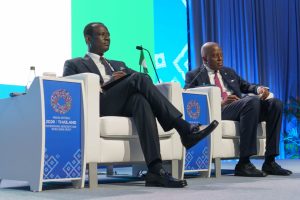
Nigeria has called for reforms to the global financial system to make financing more affordable for developing countries while unveiling 65 investment projects valued at $78.5 billion at the 2026 IMF/World Bank Annual Meetings in Bangkok, Thailand.
The meetings, which ended on October 17, 2026, provided Nigeria with an opportunity to showcase the results of its economic reforms, attract international investment and push for policies that support sustainable growth and employment.
The Nigerian delegation was led by the Minister of Finance and Coordinating Minister of the Economy, Taiwo Oyedele, and Central Bank of Nigeria Governor Olayemi Cardoso.
In its presentation, Nigeria highlighted economic growth of about 4.4 per cent in the second quarter of 2026, four consecutive months of falling inflation and foreign reserves exceeding $55 billion.
Other indicators presented included a tax-to-GDP ratio of 12.5 per cent and public debt at 36 per cent of GDP.
The Federal Ministry of Finance said one of the major achievements of the meetings was the launch of Projects Nigeria, which comprises 65 bankable projects with an estimated value of $78.5 billion.
The initiative has received expressions of interest from Asian and European investors, raising prospects for increased private-sector participation in Nigeria’s development.
Nigeria also recorded progress in its engagement with international development partners, with the World Bank Group providing support for power and infrastructure through guarantee instruments.
The IMF is expected to continue providing technical assistance in fiscal governance, fiscal transparency and statistics.
Meanwhile, the Japan International Cooperation Agency, the United States Treasury and the European Union made commitments to deepen cooperation with Nigeria.
At the global policy level, Nigeria concluded its chairmanship of the G-24 after advocating a quota-based IMF system, fairer credit rating practices and lower financing costs for developing countries.
Oyedele also raised concerns about the ability of global economies to generate enough jobs for their growing populations, particularly as artificial intelligence transforms the labour market.
He warned that about 1.2 billion young people were expected to enter the global labour market over the next 10 to 15 years, compared with an estimated 400 million available jobs, according to the World Bank.
The minister urged the IMF and World Bank to measure economic success not only by growth figures but also by the number of jobs created.
“Stability was the first test. Growth that employs our people is the second,” he said.
Oyedele further stressed that Nigeria would not reverse its economic reforms by returning to fuel subsidies or multiple exchange rates.
The Federal Government said the country’s participation in the meetings reinforced its commitment to attracting investment, sustaining macroeconomic stability and promoting growth that delivers tangible benefits to Nigerians.
