


Chinese Nationals Appear Multiple Times on INEC Voter Register, Commission Silent
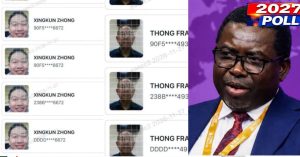
Fresh controversy has erupted over the integrity of the Independent National Electoral Commission’s (INEC) voter register following the circulation of photographs on social media allegedly showing Chinese nationals appearing multiple times in the electoral database.
One individual identified as Xingkun Zhong reportedly appears seven times under a single polling unit in Abuja, while another person identified as Thong Frank allegedly appears four times on the register.

The claims have raised concerns about the accuracy, credibility and security of INEC’s voter database ahead of the 2027 general elections.
The latest development comes amid growing scrutiny of questionable entries and suspected artificial intelligence-generated photographs discovered on the commission’s preliminary Register of Voters.
Earlier reports had highlighted suspicious photographs on voter profiles published on INEC’s official website, prompting calls for an independent investigation into the electoral database.
Following the reports, the Socio-Economic Rights and Accountability Project (SERAP) urged President Bola Tinubu to direct the Nigeria Data Protection Commission (NDPC) to investigate the alleged irregularities and determine whether Nigerians’ personal information had been unlawfully accessed, altered or compromised.
In a letter dated October 31, 2026, and signed by its Deputy Director, Kolawole Oluwadare, SERAP called for an independent forensic examination of the reported irregularities.
The organisation also urged authorities to identify those responsible, establish the number of affected records and ensure that eligible voters were not wrongly excluded from the electoral process.
SERAP warned that questionable entries and possible unauthorised alterations to the database could undermine public confidence in the electoral process and compromise the credibility of the register ahead of the 2027 elections.
INEC had earlier acknowledged concerns over suspected AI-generated photographs and questionable registration records identified during the nationwide display of the preliminary register between October 9 and 15, 2026.
The commission reportedly said the affected records had been flagged for further examination, adding that verification and data-cleanup exercises were ongoing ahead of the certification of the final Register of Voters scheduled for December 15, 2026.
However, the latest photographs circulating online have introduced another dimension to the controversy, with questions arising over the reported multiple appearances of individuals under the same polling unit.
Repeated appearances of a name in a preliminary register do not automatically establish that the individual registered multiple times or that each entry represents a separate valid voter registration. The authenticity and circumstances of the records would need to be independently verified.
As of the time of filing this report, INEC had yet to publicly authenticate the latest photographs or explain the circumstances surrounding the alleged multiple entries.
The commission is expected to clarify whether the records resulted from database errors, duplicate entries, technical lapses or other irregularities.
The controversy comes at a critical period in preparations for the 2027 general elections, with increasing calls for transparency, accountability and stronger safeguards to protect the integrity of Nigeria’s electoral register.
