


Nigeria Customs Urges African Institutions to Embrace Strategic Communication for Sustainable Development
The Nigeria Customs Service (NCS) has called on African institutions to adopt strategic communication as a key driver of institutional transformation, public trust and sustainable development.
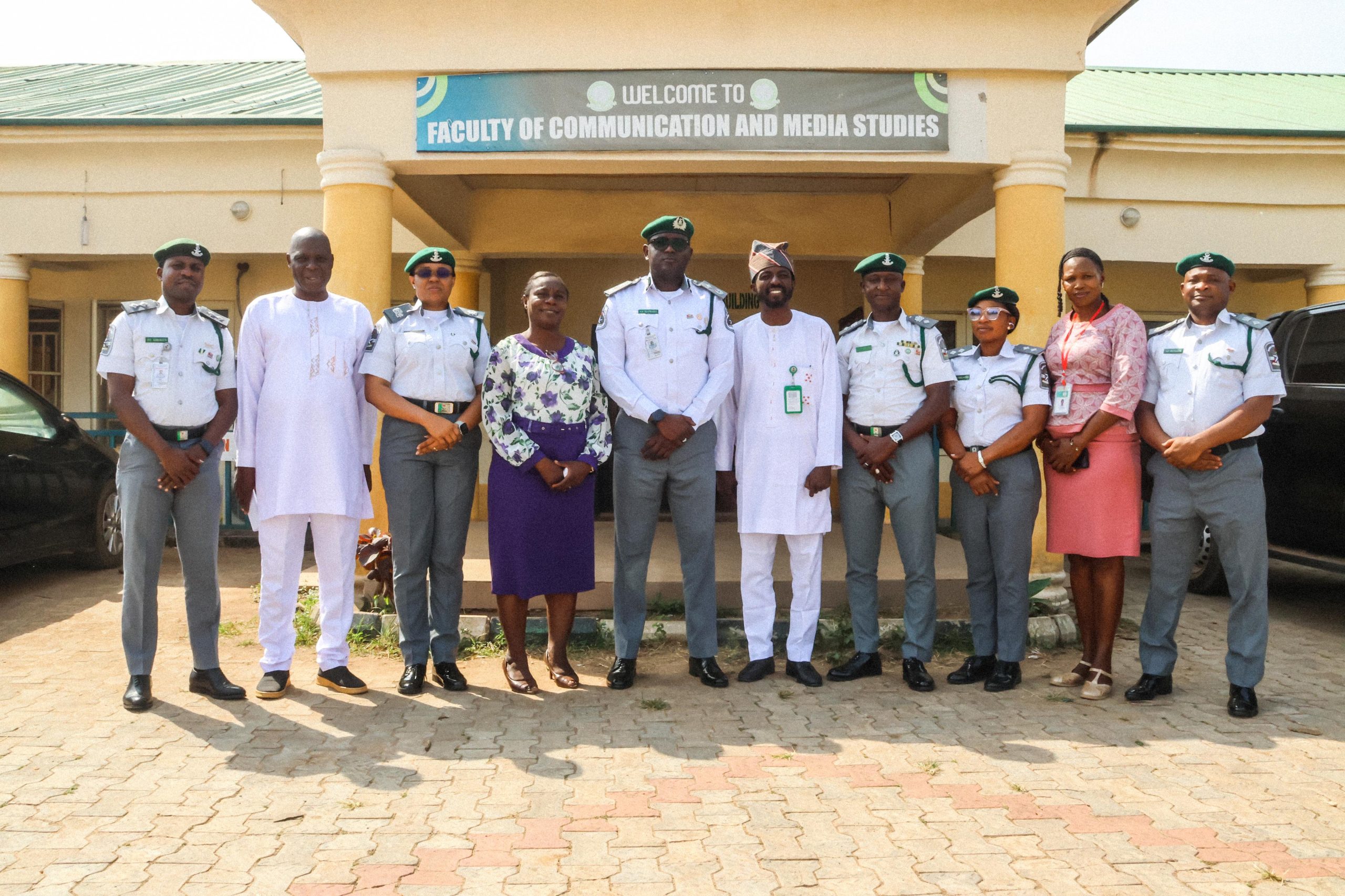
The Service made the call at the 2nd International Conference of the Faculty of Communication and Media Studies, Federal University Oye-Ekiti (FUOYE), held on November 23, 2026.
The National Public Relations Officer of the NCS, Deputy Comptroller Abdullahi Maiwada, delivered a keynote address on the theme, “Shaping Africa’s Future: Communication, Media Innovation and Sustainable Development in Transforming Society.”
DC Maiwada stressed that communication should be integrated into policy formulation and implementation rather than treated as a publicity activity after decisions have been made.
He explained that the success of institutional reforms depends not only on the policies introduced but also on how effectively institutions communicate their objectives, engage stakeholders and build public confidence.
“If Africa must transform its society, it must also transform the way it communicates, informs, engages and builds trust,” he said.
The Customs spokesman noted that the effectiveness of public communication should be measured by how well audiences understand messages and make informed decisions, rather than the volume of press releases and publicity materials produced.
According to him, institutional credibility is built through consistent conduct, credible information and meaningful engagement with stakeholders.
“Trust cannot be demanded; it must be earned through consistent conduct, credible information and meaningful engagement,” he added.
Highlighting the NCS’s experience, Maiwada identified strategic communication as essential to the implementation of major reforms, including the B’Odogwu Unified Customs Management System, Authorised Economic Operator (AEO) Programme and Advance Ruling System.
He said sustained engagement with importers, exporters, licensed customs agents, officers and other stakeholders was necessary to ensure the successful implementation of the initiatives.
He also cited the Customs Cares Initiative as an example of the Service’s commitment to institutional responsibility and social investment, emphasising that such programmes should be communicated through verifiable results and their impact on beneficiaries.
On media innovation, the NCS spokesman warned that misinformation, manipulated content and AI-generated falsehoods were increasingly threatening public communication and institutional credibility.
He maintained that technological advancement must reinforce accuracy, professional responsibility and ethical standards.
Maiwada also advocated inclusive innovation that accommodates Africa’s linguistic diversity, persons with disabilities and communities affected by the digital divide.
He called for stronger collaboration between universities and communication practitioners, citing the NCS’s Gown and Town sessions organised during its Public Relations Conferences in 2025 and 2026.
He disclosed that Lagos was being considered for the next edition of the programme, which provides students with opportunities to interact with professionals and gain practical knowledge of the communication industry.
Declaring the conference open, the Vice-Chancellor of FUOYE, Professor Joshua Olalekan Ogunwole, represented by the Deputy Vice-Chancellor (Academic), Professor Joshua Omotosho, reaffirmed the university’s commitment to producing graduates capable of contributing meaningfully to society.
He commended the relevance of the conference theme, noting that Africa’s digital transformation presents opportunities for improved access to information, democratic participation and entrepreneurship, while also creating challenges such as misinformation, unequal access and declining media credibility.
Earlier, the NCS delegation paid a courtesy visit to the Office of the Vice-Chancellor, where discussions focused on strengthening relations and exploring areas of collaboration between the Service and the academic community.
The engagement was aimed at promoting communication research, professional development and knowledge exchange.
