


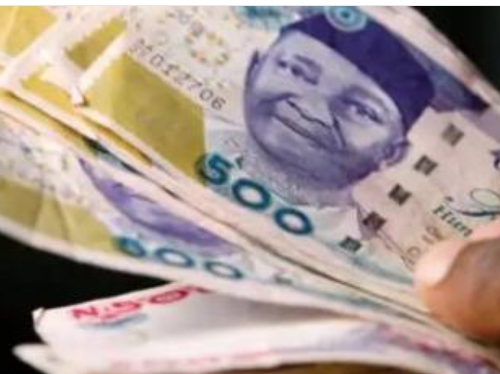
REVEALED: How Naira Slipped To Become Worst Performing Currency Globally
Nigeria’s naira has reversed recent gains and was the world’s worst performing currency in the last month, increasing pressure on the Central Bank to keep raising interest rates.
The naira has slipped to 1,466.31 to the dollar, its weakest level since March 20, hurt by the local scarcity of the US currency which on Thursday halved from the day before to just $84million, Bloomberg reports.
Razia Khan, chief economist for Africa and the Middle East at Standard Chartered, estimates that $1.3 billion in naira futures will mature at the end of this month, weighing on market sentiment. “The belief is that this will create more demand for dollars,” she said.
The slide is the latest bout of volatility since Nigerian President Bola Tinubu relaxed foreign-exchange controls in June. The unit has depreciated around 68% against the greenback since then and Khan said its latest swing shows market forces are being allowed to work.
“When the currency appreciated very fast, there had been a bout of profit taking by offshore investors, and this meant that dollar-naira exchange rate backed up again,” Khan said. “This is completely in line with the functioning market.”
Still, the decline will likely add pressure on the Central Bank of Nigeria to raise rates again at the conclusion of its next policy meeting on May 21.
It increased rates by a total of 600 basis points at its two meetings in February and March. That helped the naira reverse losses that took it to a low of 1,627 naira on March 8 to 1,072 in mid-April, as investors bought higher yielding local assets.
Naira weakness was also seen on the unofficial market, where it slipped 0.9% to 1,468 naira a dollar on Friday owing to increased demand from individuals and small businesses, said Abubakar Muhammed, chief executive of Forward Marketing Bureau de Change Ltd., which tracks the data in the commercial capital, Lagos.
Naira appreciation has stalled in the face of sluggish demand from international investors for local assets amid concerns over dwindling reserves, said Danelee Masia, senior economist for South Africa and sub-Saharan Africa at Deutsche Bank.
“We think the naira is likely to be vulnerable to stronger seasonal FX demand” for dollars,” she said. “FX demand tends to go up in Nigeria in Q3 and Q4, driven by stronger corporate demand ahead of the holiday season.”
The naira and other African currencies are being pressured by higher domestic demand for dollars to pay for the import of raw materials and other commodities including oil, said Ayodele Salami, chief investment officer for UK-based Emerging Markets Investment Management Ltd.
Nigeria is one of Africa’s largest oil producers but its limited refining capacity means it is importing most of its energy products, leading to significant dollar outflows.
Two other African countries rank among the four worst performing currencies in the last month.
The Zambian kwacha touched a record low of 27.3969 per dollar on Friday. Ghana’s cedi had retreated to 13.99 naira a dollar on Friday, the weakest level since 2022. Both countries are in the process of restrcturing their debts.
“For Ghana and Zambia, the delays with reaching a debt restructuring agreement with private creditors is likely weighing on capital flows,” Salami said. “Both countries are unlikely to attract fresh capital inflows until the ongoing debt restructuring negotiations are concluded.”
