


‘Which North? North Korea or North Carolina?’ Nigerians Mock Politicians Promising Tinubu Northern Votes
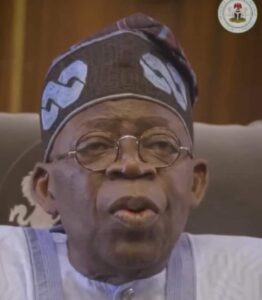
As political activities ahead of the 2027 presidential election gather momentum, Nigerians have taken aim at politicians who claim they can deliver millions of northern votes to President Bola Ahmed Tinubu.
The debate has gained attention on social media, where citizens are questioning whether a few influential politicians can genuinely determine the voting decisions of an entire region.
One sarcastic question has become a central feature of the discussion: “Which North? North Korea or North Carolina?”
The remark reflects growing concerns about politicians who speak as though voters are under their personal control, despite the diversity of political opinions and interests across Northern Nigeria.
Among the prominent political figures whose declarations have attracted attention are Senator Abdul’aziz Yari, Director-General of the All Progressives Congress (APC) Presidential Campaign Council; former Kano State Governor Ibrahim Shekarau; and incumbent Kano State Governor Abba Kabir Yusuf.
Their comments and political positions have reignited discussions about whether endorsements from influential leaders necessarily translate into electoral support from millions of Nigerians.
Yari’s Argument for Political Reciprocity
Senator Yari has repeatedly called on Northerners to support Tinubu’s re-election bid in 2027, arguing that the region should reciprocate the support the President gave former President Muhammadu Buhari during his time in office.
Buhari, who governed Nigeria from 2015 to 2023, emerged from the North, while Tinubu succeeded him in 2023.
In September, Yari argued that Tinubu supported Buhari when it was the North’s turn to produce the President and that Northerners should now support Tinubu’s second-term ambition.
He has also defended the principle of rotational presidency, insisting that the existing political arrangement should be respected.
However, the argument has raised questions about whether political agreements between leaders should determine the choices of ordinary citizens.
Although some voters may support Yari’s position on power rotation and national unity, others may prefer to assess Tinubu’s performance before deciding whether to support his re-election.
Others may choose opposition candidates based on their political beliefs, economic concerns or expectations of government.
Nigeria’s democratic system gives every eligible voter the right to make an independent decision, regardless of the political arrangements or endorsements announced by party leaders.
Abba Yusuf’s Declaration Raises Questions
The controversy gained further attention following Kano State Governor Abba Kabir Yusuf’s declaration that the North would support Tinubu’s re-election.
Yusuf reportedly made the statement on October 17, 2026, during the inauguration of the Arewa for Asiwaju campaign office in Abuja.
The governor pledged to mobilise support for Tinubu across the North and highlighted Kano’s importance in the region’s electoral calculations.
Kano is one of Northern Nigeria’s major electoral centres, making the governor’s position politically significant.
However, critics of such sweeping declarations argue that a governor’s political commitment does not necessarily represent the views of every eligible voter in the state.
A governor can mobilise party members, establish campaign structures and encourage residents to support a candidate. Nevertheless, the final decision rests with individual voters.
Northern Nigeria comprises 19 states with different political histories, interests and voting patterns. Even within individual states, citizens hold diverse political opinions.
Consequently, a declaration of regional support should not automatically be interpreted as proof that millions of voters have already decided to support a particular candidate.
Why Nigerians Are Questioning the Claims
The reaction reflects a broader debate about the relationship between political leaders and the electorate.
Over the years, Nigerian politicians have frequently claimed they possess the influence needed to deliver votes from their states, local government areas or geopolitical zones.
Such declarations are often used to demonstrate political strength and reassure candidates that they have influential allies capable of mobilising supporters.
However, the practice can also create the impression that voters are political assets whose decisions can be negotiated or transferred between candidates.
Many Nigerians are challenging that assumption, insisting that electoral support should be earned rather than guaranteed by political endorsements.
Economic hardship, insecurity, unemployment, poverty and the rising cost of living remain major concerns for many citizens.
For voters dealing with these challenges, appeals based solely on political alliances, regional solidarity or gratitude may not be enough to determine their choices in 2027.
They may instead consider whether government policies have improved their living conditions, whether security has improved and whether economic opportunities have expanded.
These are issues that political endorsements alone cannot resolve.
Northern Nigeria Is Not a Single Voting Bloc
Another major concern is the tendency to treat Northern Nigeria as though it were a politically uniform region.
The North consists of diverse ethnic groups, religious communities, economic interests and political traditions. Voters in Kano may have different priorities from those in Borno, Plateau, Benue, Sokoto, Kaduna or Adamawa.
Even within the same state, supporters of different parties, undecided voters and citizens dissatisfied with the major political parties may hold sharply contrasting views.
The region’s electoral history also shows that northern voters have supported different candidates across various elections, depending on political alliances, party structures, candidates and prevailing public sentiment.
This diversity makes it difficult for any individual politician to guarantee the support of an entire region.
Yari, Shekarau, Yusuf and other influential political figures may have networks capable of mobilising supporters, but political influence should not be confused with ownership of the electorate.
Their endorsements may strengthen a campaign, but they cannot replace the independent decisions of voters.
What It Means for Tinubu’s Re-election Campaign
For Tinubu’s campaign, endorsements from influential northern politicians could provide an important foundation for mobilisation ahead of 2027.
Such support may help strengthen party structures, coordinate campaign activities and attract additional supporters.
However, the ultimate value of these endorsements will depend on whether they convince ordinary Nigerians to support the President.
Rather than relying exclusively on political alliances and promises to deliver entire regions, the campaign will need to explain what Tinubu’s administration has achieved and what it intends to accomplish during another four-year term.
Voters will have the right to assess those claims against their personal experiences and expectations.
The same principle applies to opposition parties, which must also present convincing alternatives rather than assume that dissatisfaction with the incumbent automatically translates into support for their candidates.
Voters Will Have the Final Say
The sarcastic question, “Which North? North Korea or North Carolina?” may sound humorous, but it highlights a serious democratic issue.
At its core, the debate concerns whether citizens are recognised as independent voters or treated as political numbers that influential figures can promise to deliver.
Politicians have the right to campaign for Tinubu, endorse his re-election and mobilise their supporters. Equally, Nigerians have the right to reject those arguments, demand accountability and choose their preferred candidates.
Northern Nigeria belongs to its people, not to any governor, senator, former governor or campaign council.
As the 2027 election approaches, political leaders will need to do more than announce that they can deliver millions of votes. They must convince voters why their preferred candidate deserves their support.
Ultimately, the outcome will not be determined by political promises or campaign declarations, but by the decisions Nigerians make at the ballot box.
