
 Ibom Focus
ICPC, CAC Call for Stronger Inter-Agency Collaboration Against Corruption
The Chairman of the Independent Corrupt Practices and Other Related Offences Commission (ICPC), Dr. Musa Adamu Aliyu, SAN, has declared that transparent governance remains the indispensable foundation for Nigeria’s sustainable development.
Dr. Aliyu made this assertion while delivering a keynote address at the Anti-Corruption Day event held as part of activities marking the 35th anniversary of the Corporate Affairs Commission (CAC).
Speaking on the theme, “Transparency and Development: The Nigerian Experience,” and represented by the ICPC Director of Public Education, Mr. Demola Bakare, fsi, the ICPC Chairman stressed that transparency has evolved from being an externally driven reform agenda to a critical domestic necessity.
According to him, countries that institutionalise open access to information and strict accountability frameworks are those that achieve sustained economic growth and institutional stability.
“Our historical experience shows that weak transparency in governance and corporate practices has provided fertile ground for corruption, tax evasion, and illicit financial flows,” he stated. “These practices have systematically undermined our institutions and slowed our development, demonstrating that failure often stems from opaque systems rather than a lack of resources.”
Dr. Aliyu highlighted the pivotal role of the CAC in strengthening national integrity systems, noting that its regulation of corporate entities significantly influences investor confidence and Nigeria’s international business reputation.
He commended the Commission’s recent reforms, particularly the digitisation of company registration processes and its leadership in beneficial ownership disclosure, describing them as far-reaching steps toward enhancing corporate transparency.
However, the ICPC Chairman cautioned that legislation alone cannot guarantee results. He emphasised that the effectiveness of transparency laws depends on consistent implementation, robust enforcement, and a supportive institutional culture.
He called for deeper inter-agency collaboration, greater use of open data in public policy formulation, and a collective commitment to transparency by citizens and the private sector.
In his remarks, the Registrar-General/CEO of the CAC, Hussaini Ishaq Magaji, SAN, echoed the need for synergy among institutions. He described the fight against corruption as a national responsibility requiring seamless coordination among agencies.
“No agency can succeed in isolation. We must deepen information sharing and undertake joint investigations to ensure our collective efforts produce measurable outcomes for Nigeria,” Magaji said, reaffirming the CAC’s readiness to support anti-corruption bodies.
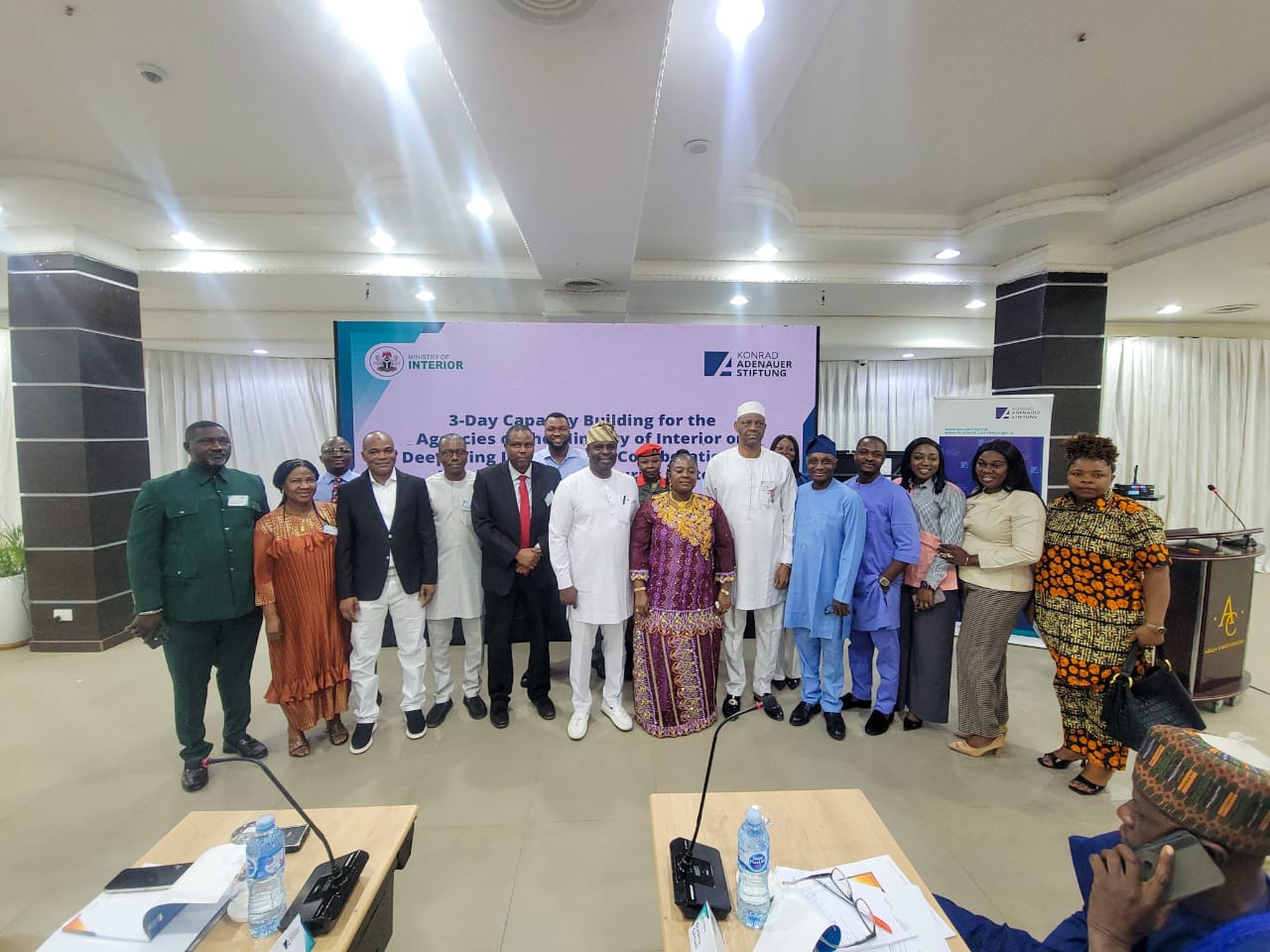
The event, attended by stakeholders across governance and anti-corruption sectors, featured a panel discussion on strengthening national integrity systems. A highlight of the ceremony was the presentation of an award of recognition to the ICPC by the CAC for its significant contributions to promoting transparency, accountability, and good governance in Nigeria.






0vqw2g
a51yli