

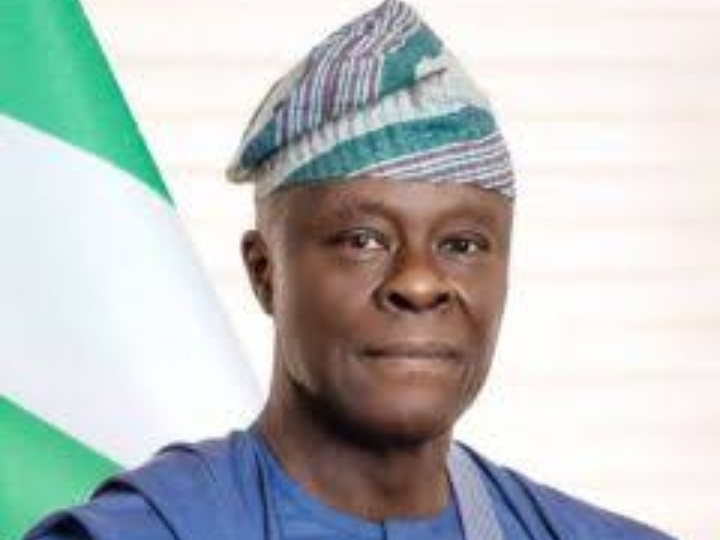
Edun Urges Developing Countries to Adopt Measures to Cushion Global Shocks
The Minister of Finance and Coordinating Minister of the Economy, Wale Edun, has called on developing countries to adopt proactive measures to mitigate the impact of global economic shocks.
Edun made this appeal during the G24 news conference held on the sidelines of the ongoing International Monetary Fund meeting in Washington, D.C.
He warned that premature or excessive interest rate hikes could undermine ongoing economic reforms, while delayed policy responses risk fuelling inflation.
According to him, Central Banks in developing economies play a critical role in navigating challenges such as energy crises and geopolitical tensions.

The minister noted that policy responses vary across countries, particularly between oil-producing and oil-importing nations. While countries like Nigeria may benefit from increased oil revenues, oil-importing countries face higher costs. However, both groups continue to grapple with inflationary pressures stemming from energy markets.
Edun stressed that even oil-exporting nations are not immune, as rising costs of gas, fertiliser, and food are being felt across economies, underscoring the far-reaching effects of the global energy crisis.
He emphasised the importance of building economic resilience, urging countries to utilise existing fiscal buffers and implement targeted, temporary relief measures for vulnerable populations, rather than reversing key reforms already in place.
Cautioning against a return to subsidy regimes, Edun stated that reforms such as fuel subsidy removal and foreign exchange liberalisation have strengthened Nigeria’s economic framework despite recent external shocks.
He further urged governments to prioritise support for the most vulnerable citizens, ensuring they can cope with rising living costs without jeopardising long-term structural reforms essential for sustainable growth.
Edun observed that positive oil price shocks could strengthen fiscal and external balances for exporting countries, creating room for responsible public investment. However, he stressed the need for disciplined macroeconomic management.
He cited the adoption of hedging strategies by some countries to stabilise oil revenues, noting that such measures enhance predictability and support long-term fiscal planning amid volatile global market conditions.
The minister also pointed out that while developing countries continue to expect support from advanced economies, declining overseas development assistance and rising debt servicing obligations are worsening their fiscal challenges.
According to him, debt servicing costs in many developing countries have now surpassed inflows from aid and investment, significantly limiting fiscal space and constraining efforts toward meaningful economic transformation.
Edun called on multilateral institutions to increase liquidity support and provide policy guidance to help developing nations manage current economic pressures and financial vulnerabilities more effectively.
He identified domestic resource mobilisation as a more sustainable path forward, advocating improved tax systems and stronger private sector participation to boost revenue and reduce dependence on external financing.
The minister also pushed for concessional financing and innovative risk management tools to lower borrowing costs, noting that high debt servicing burdens continue to hinder development and economic transformation across many developing countries.
On technology, Edun acknowledged that while the rise of Artificial Intelligence (AI) may initially widen inequality, it also presents opportunities to enhance revenue mobilisation through automation and digitalisation.
He added that improving tax-to-Gross Domestic Product (GDP) ratios would depend significantly on technology adoption, including AI, to boost efficiency, transparency, and overall revenue generation.
Edun expressed concern over slowing global trade growth, noting that fragmentation and supply chain disruptions are prompting developing economies to focus more on domestic production and regional integration.
Also speaking, the Director of the G-24 Secretariat, Iyabo Masha, highlighted that supply-side constraints, particularly in oil production, respond weakly to monetary policy. She therefore urged Central Banks to adopt a cautious, data-driven approach to decision-making.
Masha further called on multilateral institutions to intensify support, especially in reducing borrowing costs and addressing debt-related challenges. She also reaffirmed the importance of a rules-based global trading system in promoting inclusive economic growth.
Efe Ovuakporie
Head Information and Public Relations Unit
