


‘I Was Paid N100,000 To Bomb Worshippers’ — Arrested Boko Haram Member Exposes Top Sponsor
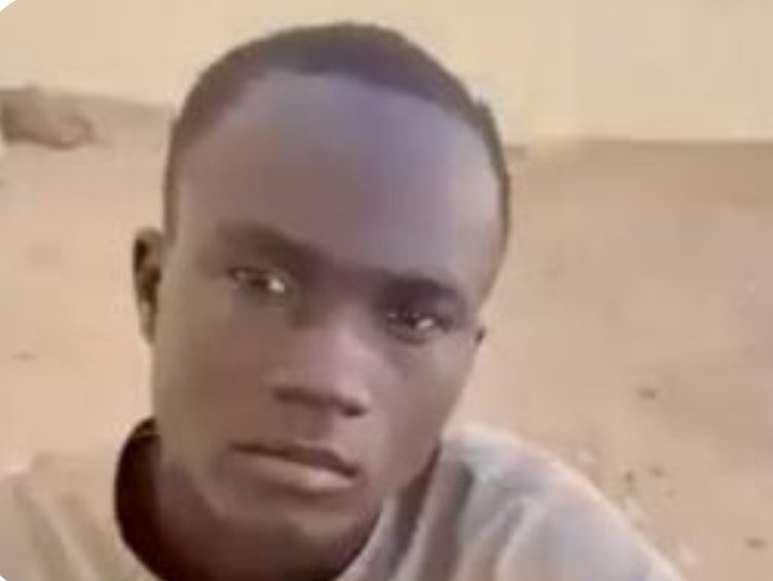
A suspected Boko Haram suicide bomber, Ibrahim Mohammed, arrested by troops of Operation Hadin Kai in collaboration with local hunters in Yobe State, has revealed chilling details of how he was recruited, funded, and deployed to carry out deadly attacks on worshippers in Maiduguri, Borno State.
Mohammed, who confessed to his involvement in the December 24 suicide bombing at the Gamboru Market Mosque in Maiduguri, admitted that he received up to ₦100,000 for suicide bombing missions.
According to the suspect, the operation was planned and executed on the orders of Boko Haram commanders operating between Adamawa State and the Mandara Mountains.
“My name is Ibrahim from Michika in Adamawa State. We came to Maiduguri to plant bombs at the Izala Mosque. We were sent by our leaders, Adamu and Abubakar, who gave us two improvised explosive devices to plant inside the mosque,” he said during interrogation.
The Gamboru Market Mosque attack reportedly claimed five lives and left 32 worshippers injured, throwing the city into panic during the festive period.
Explaining how the attack was carried out, Ibrahim said the group deliberately targeted periods when the mosque was less crowded to plant the explosives.
“We came after Zuhur and Asr prayers when the mosque was empty. We entered pretending to pray. My colleague dug a hole in the middle of the mosque while I dug by the side to plant the IEDs,” he said.
He added that the devices were connected and timed ahead of the Maghrib prayers.
“As people gathered for Maghrib prayer, after the first raka’at, the bomb detonated. We set the timing for five minutes. After that, I ran towards the market area,” he explained.
In a disturbing revelation, the suspect admitted that he returned to the scene after the blast, disguising himself as a civilian assisting victims.
“When I returned, they were evacuating dead bodies and the injured. I helped them convey victims to emergency vehicles,” he confessed.
Mohammed further disclosed that suicide bombing has become a paid assignment within the terror network, with operatives receiving between ₦70,000 and ₦100,000 per mission.
He, however, claimed to have regretted his actions after witnessing the scale of civilian casualties.
“I regret my actions for killing innocent people who did not commit any crime,” he said.
Security analyst Zagazola Makama reported that Ibrahim was part of a broader terror cell dispatched to carry out coordinated attacks across the North-East by factions including Jama’atu Ahlis Sunna Lidda’awati wal-Jihad (JAS), Ansaru, and Jama’at Nusrat al-Islam wal-Muslimin (JNIM).
It was gathered that a Boko Haram unit led by a notorious IED expert, Munzir Abu Ziyadah, allegedly prepared up to 10 person-borne improvised explosive device attacks from the Ali Ngulde camp axis for the operation.
Following the Gamboru Market Mosque attack, Ibrahim reportedly moved to Yobe State to conduct reconnaissance for further attacks.
“After the mission, I went to Yobe to carry out surveillance on military locations and hunters’ groups for possible future attacks,” he said.
He also disclosed that additional suicide bombers had been deployed to Damaturu to target mosques and markets.
Mohammed was arrested at about 2:30 p.m. on December 29 in Damaturu by local hunters working alongside Operation Hadin Kai during a raid on a suspected hideout occupied by Almajirai.
Security sources said his suspicious behaviour raised concerns, leading to his arrest and subsequent interrogation, during which he confessed to being a member of the Boko Haram JAS faction operating from the Mandara Mountains.
He further admitted that he entered Maiduguri alongside the bomber who detonated the explosive device at the Gamboru Market Mosque.
