


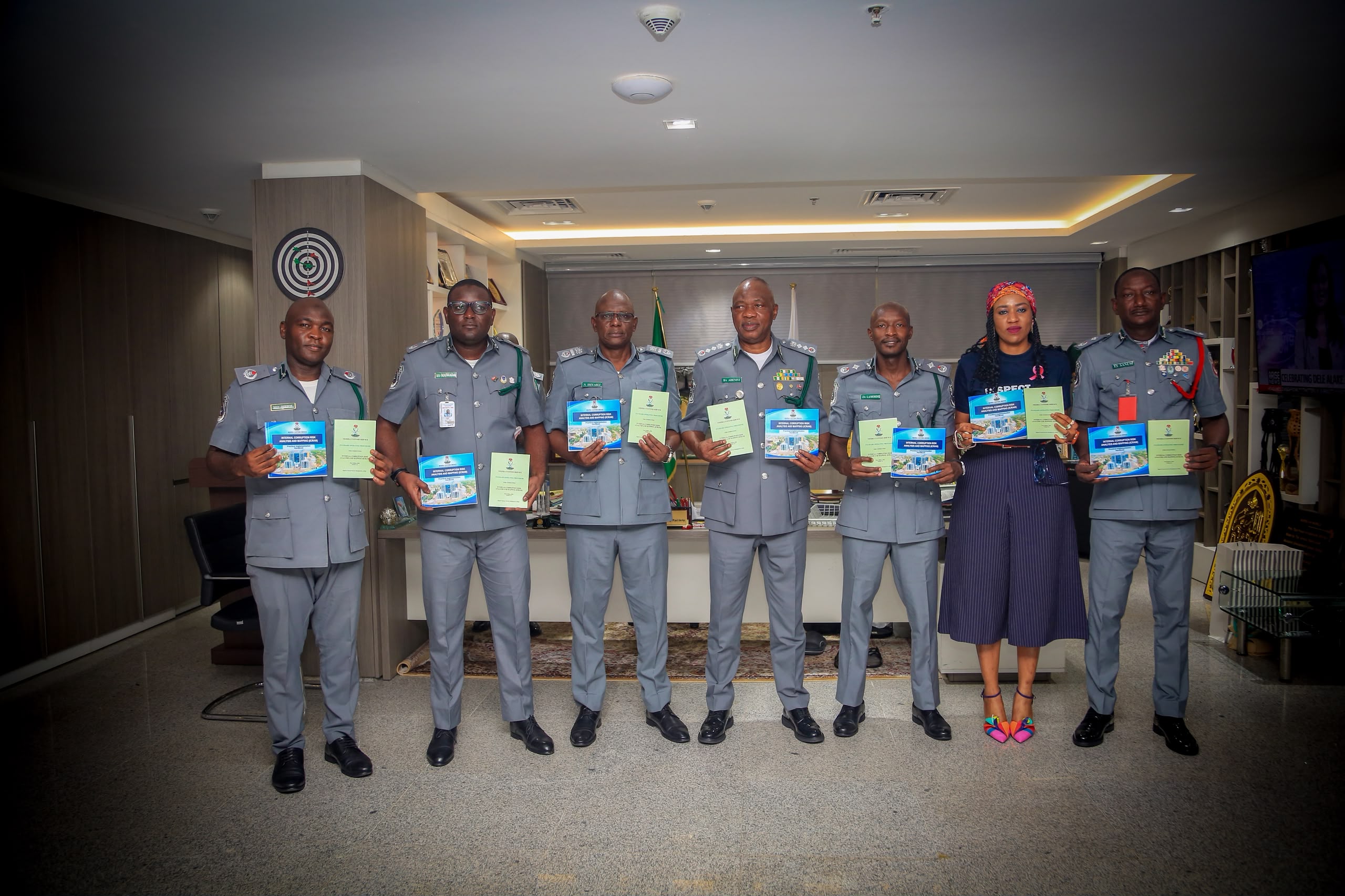
Adeniyi Activates Customs Anti-Corruption Framework, Approves ICRAM Rollout
The Comptroller-General of Customs, Adewale Adeniyi, has approved the immediate nationwide rollout of the Internal Corruption Risk Analysis and Mapping (ICRAM) framework across the Nigeria Customs Service (NCS).
Adeniyi gave the directive on Tuesday, October 6, 2026, in Abuja, where he signed three major anti-corruption instruments — the ICRAM Standard Operating Procedure (SOP), ICRAM Handbook and Integrity Action Plan (IAP).
He also inaugurated the ICRAM Steering Committee, marking a major step towards institutionalising systematic corruption-risk assessment across Customs operations.
Speaking during the ceremony at the NCS Headquarters, Maitama, the Comptroller-General said the initiative was developed through collaboration between the Service, the World Customs Organisation (WCO), His Majesty’s Revenue and Customs (HMRC), and other Customs administrations.
He stressed that the framework was designed to make integrity and corruption-risk management an integral part of Customs operations.
Adeniyi said the new documents would give Customs officers at ports, airports and border formations the capacity to identify potential corruption risks, map them and implement measures contained in the Integrity Action Plan.
He described the initiative as a practical mechanism for strengthening integrity within the Service.
The Assistant Comptroller-General of Customs, Strategic Research and Policy Department, ACG Nafi’u Isyaku, had earlier led senior officers in presenting the documents to the Comptroller-General and requested approval for their full implementation.
The ICRAM methodology was first tested in seven Customs Commands and Units, where 66 processes spanning regulatory, core Customs and support functions were assessed.
The pilot covered Apapa Area Command for sea operations; MMAC and MMIA Commands for air operations; Seme Area Command for land operations; as well as the Customs Police Unit Zone A, PAAR Ruling Centre and Procurement Unit.
Findings from the pilot resulted in an Integrity Action Plan comprising 101 Action Items and 295 Sub-Action Items.
Among the measures identified for implementation are increased automation of processes, stronger supervision and accountability, improved audit trails and traceability, effective separation of duties, regular rotation of personnel, specialised training and stronger controls in interactions between officers and stakeholders.
The rollout is expected to provide the NCS with a structured approach to identifying vulnerabilities, mitigating corruption risks and strengthening integrity across its operations nationwide.
