


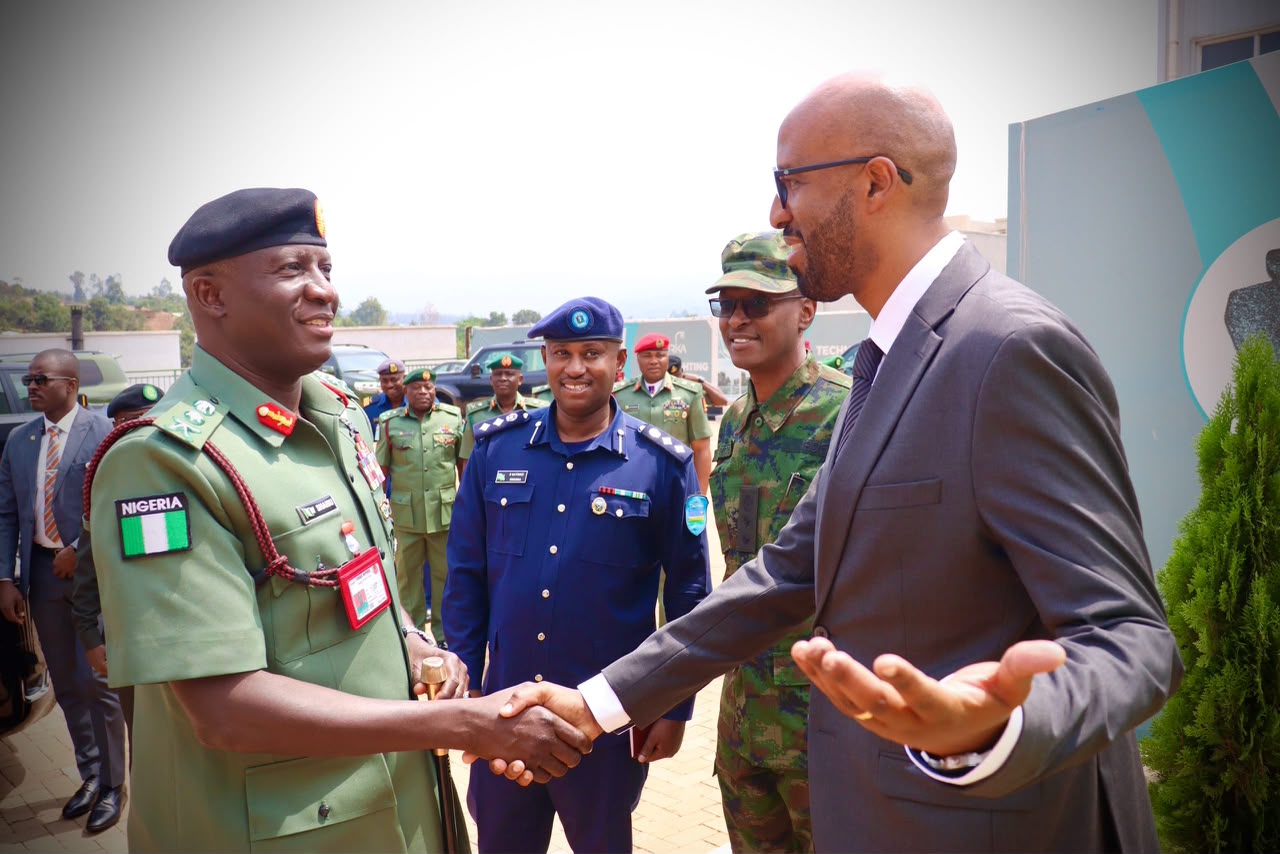
COAS Shaibu Champions African Technological Independence, Local Defence Manufacturing
The Chief of Army Staff (COAS), Lieutenant General Waidi Shaibu, has called for increased investment in indigenous African technology and local defence manufacturing to reduce dependence on foreign military equipment and strengthen the continent’s security capabilities.
Shaibu made the call during a visit to the Rwanda Engineering and Manufacturing Corporation (REMCO) in Kigali on Wednesday, October 21, 2026, as part of his official working visit to the Republic of Rwanda.
The Army Chief, who was received by REMCO’s Chief Executive Officer, Mr Emile Rungambajye, toured the corporation’s facilities to assess its engineering and manufacturing capabilities. He emphasised the importance of African innovation, technological advancement and industrial development in building sustainable defence systems.
The engagement also highlighted the need for African countries to invest in research and development, harness local expertise and establish strategic technological partnerships to develop homegrown solutions to emerging security challenges.
Established in 2018, REMCO is a government-owned engineering and manufacturing company specialising in precision engineering, machining, metal casting, fabrication, machinery production and the manufacture of spare parts.
The corporation’s expanding industrial capacity demonstrates the potential of African countries to develop critical technologies, strengthen domestic production and gradually reduce dependence on foreign supply chains.
The visit also underscored the importance of strengthening Nigeria’s defence-industrial base through institutions such as the Defence Industries Corporation of Nigeria (DICON).
Building indigenous manufacturing capacity is essential to improving equipment availability, sustaining military operations, strengthening maintenance capabilities and encouraging technological innovation within the Nigerian Army.
The initiative also aligns with Shaibu’s vision of transforming the Nigerian Army into a professional, adaptable, combat-ready and resilient force capable of effectively addressing evolving security threats.
Beyond military cooperation between Nigeria and Rwanda, the engagement highlighted the need for African countries to pursue technological independence as a foundation for continental security and economic resilience.
With increasing security challenges and uncertainties surrounding global defence supply chains, the development of indigenous research, innovation and manufacturing capabilities remains crucial to Africa’s strategic autonomy.
The visit therefore reinforced the position that Africa’s long-term security depends on its ability to develop homegrown technologies, strengthen industrial partnerships and harness its indigenous expertise.
