

Nigeria, South Africa Share Deep Historical Ties Beyond Borders — South African Army Chief
The Chief of the South African Army (CSSA), Lieutenant General Lawrence Mbatha, has emphasized that the relationship between Nigeria and South Africa goes far beyond diplomatic engagements, describing the ties between both nations as deeply rooted in shared African history, culture, and long-standing cooperation.
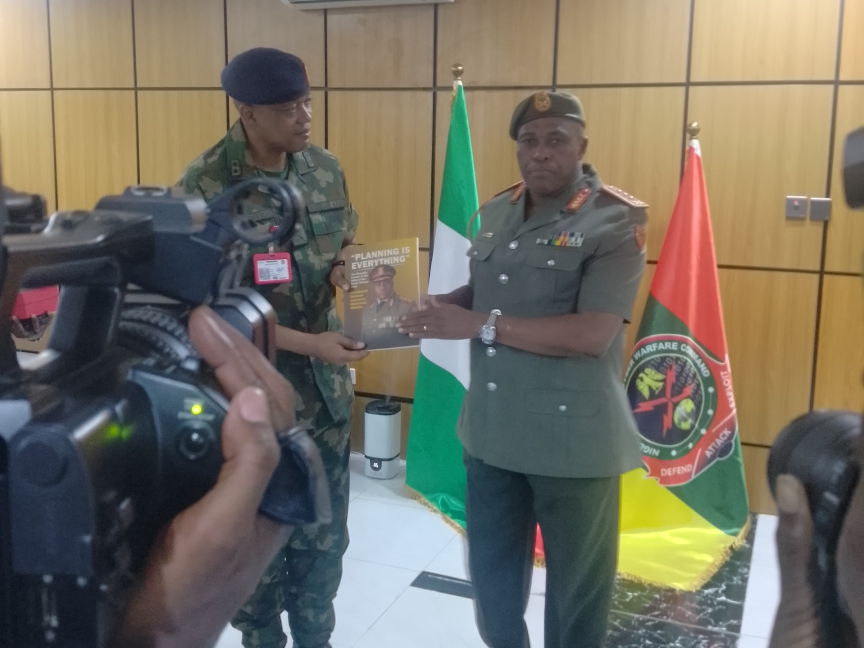
Mbatha made this known during an engagement with Nigerian Army officials and institutional leaders in Abuja while leading a South African military delegation on a visit to Nigeria.
The South African Army chief expressed appreciation for the warm reception and professionalism extended to his team by their Nigerian counterparts, noting that the hospitality reflected the strong bond that has existed between the two countries for decades.
According to him, although the visit marks his first physical trip to Nigeria, his connection with the country dates back several years through academic and professional interactions involving South African personnel who studied and trained in Nigeria.
He explained that many South Africans benefited from educational and training opportunities in Nigeria and other African countries during difficult periods in South Africa’s history, particularly during the apartheid struggle.
Reflecting on Africa’s historical development, Mbatha noted that while colonial agreements created national borders across the continent, Africans remain culturally and historically connected.
He stressed that national boundaries should not create divisions among Africans, emphasizing that people across the continent share similar identities, cultural values, and heritage.
The South African Army chief also acknowledged the role played by several African nations, including Nigeria, in supporting South Africans during the struggle years, particularly by providing education and military training to South Africans in exile.
He revealed that a number of senior South African officers and professionals received training in Nigeria in the early 1990s and have since gone on to occupy key positions in their country.
Mbatha urged younger generations in both countries to look beyond stereotypes and narratives often portrayed in the media regarding relations between Nigerians and South Africans.
According to him, the relationship between the two nations is reflected not only in diplomatic cooperation but also in cultural exchanges, intermarriages, and long-standing social connections between their citizens.
He further commended the Nigerian military institution hosting the delegation, describing the engagement as an important platform for exchanging operational experiences and strengthening institutional collaboration.
Mbatha also acknowledged the growth and strategic role of the Nigerian Army within the African security landscape, noting that such interactions would further deepen cooperation and mutual understanding between both countries.
The visit, he added, forms part of ongoing efforts to strengthen military, institutional, and diplomatic collaboration between Nigeria and South Africa, two of Africa’s most influential nations.
