 Ibom Focus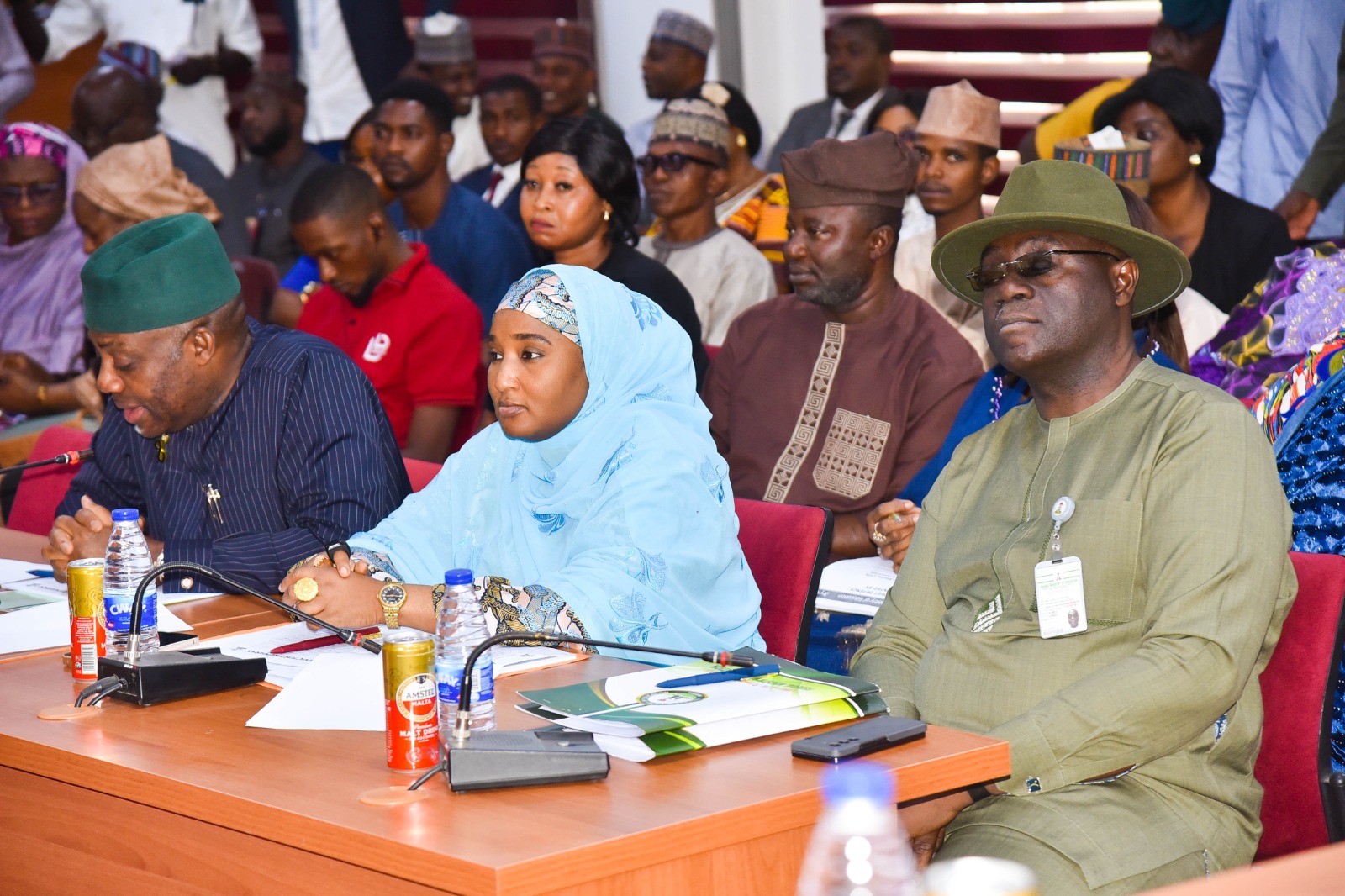
Alausa To Lawmakers: No Critical Education Project Will Be Abandoned
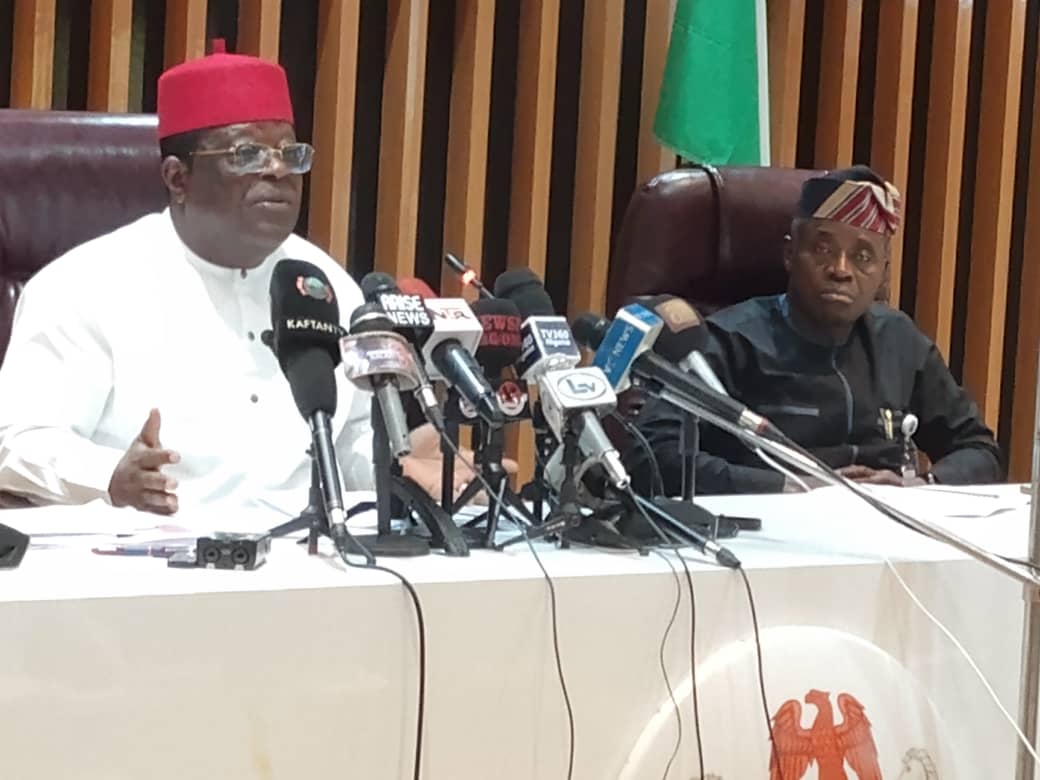
The Minister of Education, Dr Maruf Tunji Alausa, on Wednesday led the defence of the Federal Ministry of Education’s ₦2.4 trillion 2026 budget proposal before the Joint Committees on Education of the National Assembly, outlining priorities focused on teachers, infrastructure, research, and skills development.
Dr Alausa, accompanied by the Minister of State for Education, Prof. Suwaiba Said Ahmad; the Permanent Secretary, Mr Abel O. Eniitan; and other senior officials, presented the proposal during a session reviewing the 2025 budget performance and considering projections for 2026.
He emphasised that rollover provisions in the new proposal were designed to ensure that ongoing projects are not abandoned due to transitions between fiscal cycles.
“As we transit from one budget cycle to another, rollover represents our collective determination that projects critical to national education development must be completed. Appropriation must translate into execution, and execution must result in visible impact,” the minister said.
While acknowledging challenges in capital project implementation in 2025, he noted improvements in personnel and overhead expenditures. He explained that the 2026 framework aims to strengthen infrastructure, expand research capacity, enhance teacher development, promote digital learning, and improve school safety nationwide.
Alausa highlighted a shortfall of more than 3,500 teachers in Federal Unity Colleges, particularly in science, mathematics, and technical subjects. He assured lawmakers that recruitment, structured training, and retention measures had been prioritised to bridge the gap and improve learning outcomes.
Under the proposal, ₦966.9 billion is allocated to universities; ₦382.0 billion to polytechnics and colleges of education; ₦633.3 billion to education parastatals; and ₦257.9 billion for the Ministry’s headquarters operations. Federal Unity Colleges are projected to receive ₦155 billion, while ₦10.3 billion is earmarked for international commitments, including UNESCO obligations.
The minister also disclosed plans to expand Technical and Vocational Education and Training (TVET), targeting the empowerment of over five million youths with employable and entrepreneurial skills.
He reiterated that the ministry’s six-point education renewal agenda—covering STEMM advancement, reduction of out-of-school children, girl-child education, digitalisation, data-driven planning, and community engagement—remains aligned with President Bola Ahmed Tinubu’s Renewed Hope Agenda and the broader Education Sector Roadmap for 2026–2028.
In his remarks, the Co-Chairman of the Joint Committee and Chairman of the Senate Committee on Education, Sen. Muntari Dandutse, stressed the National Assembly’s constitutional duty under Section 80 of the 1999 Constitution (as amended) to scrutinise budget implementation and projections thoroughly. He called for detailed clarifications on rollover projects to ensure that allocations reflect measurable physical progress.
“We must ensure that projects do not appear repeatedly in budget documents without visible execution. Our responsibility is to guarantee that public funds are tied to measurable delivery,” Dandutse said.
Similarly, Chairman of the House Committee on Education, Rep. Abubakar Hassan Fulata, and Deputy Chairman of the Senate Committee on Education, Sen. Babagida Hussain, requested detailed nominal rolls and Internally Generated Revenue (IGR) submissions from the ministry and its agencies, underscoring strict adherence to constitutional provisions.
Responding, Alausa assured lawmakers that comprehensive documentation, including nominal rolls and detailed IGR expenditure plans, would be submitted promptly to support legislative scrutiny. He described the engagement as a collaborative effort anchored on accountability, efficiency, and timely project delivery.
Following deliberations, the Joint Committees formally received and adopted the ministry’s submission for further legislative consideration, with additional documents to be transmitted through the Permanent Secretary as requested.
The minister concluded by reaffirming the ministry’s readiness to provide further clarifications and to work closely with the National Assembly to ensure the successful implementation of the 2026 education budget.
Boriowo Folasade
Director, Press and Public Relations


2hsqlj
8wrwud
z2m1iv