 Ibom Focus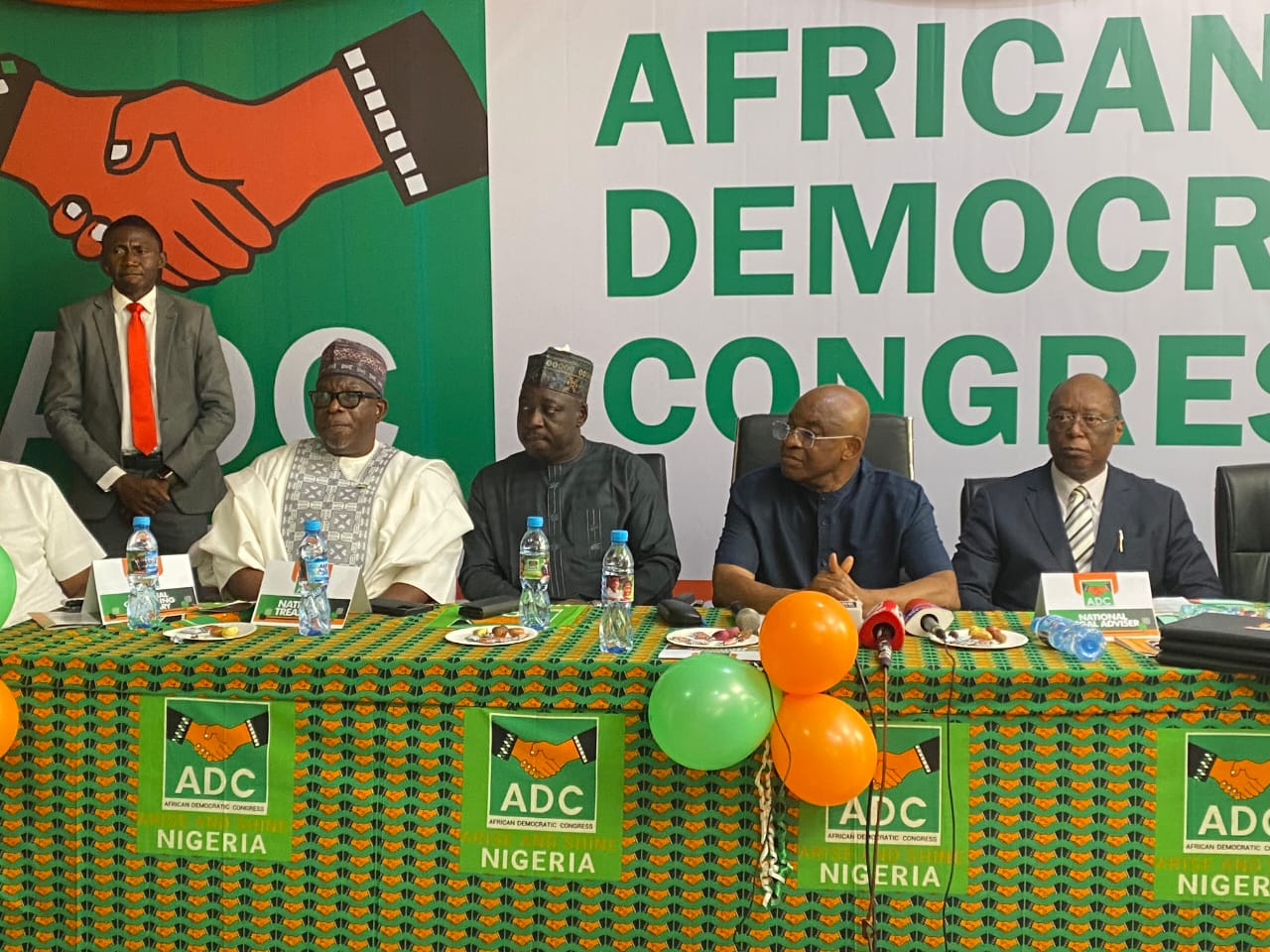
ADC Inaugurates Policy, Manifesto Committee as David Mark Vows People-Centred Governance
The National Chairman of the African Democratic Congress (ADC), Senator David A. B. Mark, GCON, on Monday charged the party’s newly inaugurated Policy and Manifesto Committee to develop practical, compassionate and people-focused policies capable of rescuing Nigeria from deepening hardship.
Speaking at the inauguration ceremony in Abuja, Mark said Nigerians were currently experiencing unprecedented levels of suffering, driven by worsening poverty, rising food prices, epileptic power supply, insecurity and what he described as “needlessly vicious policies” of the ruling All Progressives Congress (APC).
He noted that while poverty and hardship had always existed in the country, the situation had significantly deteriorated under the APC administration, stressing that Nigerians were no longer interested in “clever arguments” or impressive statistics that failed to improve their daily lives.
“Nigerians are not looking for who to blame for their suffering; they already know that. They are looking for who will ease the pain,” Mark said. “What they want are credible alternative ideas, actions and policies that show clarity, courage and, most importantly, compassion.”
The ADC chairman criticized the federal government’s frequent emphasis on revenue growth, GDP figures and economic indicators, arguing that such statistics were meaningless if they did not translate into better living conditions for citizens.
According to him, policy failure in Nigeria often stems from the inability to connect ideas to reality, as government programmes are frequently designed as academic exercises detached from the needs of ordinary people.
Mark urged the committee to avoid superficial solutions and focus instead on addressing the root causes of Nigeria’s challenges, particularly in critical sectors such as energy, transportation, agriculture, security, healthcare, education and job creation.
On fuel subsidy removal, he said the real issue was not whether subsidy removal was right or wrong, but whether Nigerians paying higher prices could see tangible benefits in other aspects of their lives.
“Clearly, the answer is no,” he said, adding that the ADC must clearly explain what it would do differently to ease the burden on citizens.
He emphasized that energy affordability was central to economic productivity, while transportation must remain a social and economic lifeline that enables access to jobs, markets, schools and healthcare.
On food security, Mark linked rising hunger to insecurity, poor infrastructure, weak supply chains and high input costs, insisting that hunger should be treated as a policy failure rather than an accident.
He also described insecurity as a lived reality that goes beyond loss of life, pointing to abandoned farms, displaced communities, kidnapping, closed schools and widespread fear that stifles economic activity.
Healthcare and education, he said, must be measured by access, affordability and outcomes, not merely by the number of facilities built. He further urged the committee to explore policies that would guarantee compulsory education for all children, including measures to discourage parents from keeping children out of school.
Mark also warned against internal party capture, calling for safeguards to prevent any individual, regardless of wealth or influence, from taking total control of the ADC.
He stressed that good governance, strong institutions and accountability were essential for policy success, noting that weak execution often renders good ideas ineffective.
Charging the committee to engage widely, Mark said members must listen not only to experts but also to farmers, traders, workers, parents and young Nigerians across generations, testing every policy against a simple question: whether it reduces suffering or merely rearranges it.
“Nigeria does not need rhetoric. She needs honest thinking and workable solutions,” he said.
He added that the ADC must be prepared not only to win power but to justify it through service, insisting that the party should be known for seriousness, performance and reality rather than noise and propaganda.
Formally inaugurating the committee, Mark urged members to break into sub-committees based on expertise and to co-opt professionals who could add value to the assignment.
“May your work help to build a party that understands the country it seeks to lead, and a country that can once again believe that leadership is capable of easing pain and restoring hope,” he said.
The event marked a key step in the ADC’s preparations ahead of future electoral contests, as the party positions itself as an alternative platform focused on people-centred governance.