


Tinubu’s Reforms Delivering Benefits to Nigerians, Laying Foundation for Prosperity – Idris
The Minister of Information and National Orientation, Mohammed Idris, has declared that President Bola Ahmed Tinubu’s economic reforms are already producing positive results across key sectors, including security, education, infrastructure and economic development.

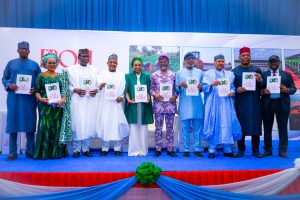
Idris made this known on Tuesday in Abuja during the media presentation of the All Progressives Congress (APC) 2027 Presidential Election Manifesto, where he maintained that the reforms were establishing a solid foundation for national prosperity.
According to him, the next four years of the Tinubu administration would focus on expanding the gains of the ongoing reforms and ensuring that more Nigerians directly benefit from them.
The minister dismissed suggestions that the benefits of the reforms were limited to particular groups, stressing that government interventions were designed to serve all Nigerians irrespective of political affiliation.
He cited the construction of roads, improvements in security and the Nigerian Education Loan Fund (NELFUND), which has supported 1.6 million students, as examples of programmes benefiting ordinary citizens.
Idris also highlighted Nigeria’s removal from the Financial Action Task Force (FATF) grey list, improved international credit ratings, declining inflation and economic growth as evidence of progress under the current administration.
He urged journalists to maintain their watchdog responsibilities while giving balanced attention to positive developments, noting that responsible journalism should reflect both government achievements and areas requiring improvement.
The Chief of Staff to the President, Femi Gbajabiamila, described the APC manifesto as a social contract between the party and Nigerians, urging citizens to scrutinise its commitments and hold the government accountable.
He disclosed that the manifesto contained measurable targets, including plans to reduce the number of out-of-school children by half by 2031 and provide seven million additional electricity meters.
Gbajabiamila said the party was seeking another mandate to consolidate its achievements, expand opportunities and ensure that Nigerians benefit more from their hard work.
Similarly, the Minister of Solid Minerals Development, Dele Alake, described the APC as an organised political party with a clear development agenda.
He argued that the Tinubu administration had introduced comprehensive structural reforms across several sectors, describing them as unprecedented in the country’s civilian democratic history.
The Minister of Budget and Economic Planning, Atiku Bagudu, said Tinubu’s economic agenda was driven by a long-term vision to transform Nigeria into a $2 trillion economy.
Bagudu acknowledged that more work was required to ensure that the benefits of economic growth reached ordinary Nigerians, particularly vulnerable citizens and hardworking families.
In her presentation, the Minister of Industry, Trade and Investment, Dr Jumoke Oduwole, identified four major pillars of the manifesto: national security and resilience; improved quality of life; energy, infrastructure and economic growth; and effective and accountable governance.
She highlighted plans to strengthen food security, reduce living costs, expand local production, increase exports and create jobs, including one million export-linked employment opportunities for young Nigerians by 2030.
Oduwole said the administration was targeting measurable improvements by 2031, with emphasis on domestic production, investment, trade and opportunities for young people.
The event attracted civil society representatives, sector experts, journalists and other stakeholders, providing the APC with an opportunity to outline its policy priorities and development commitments for 2027 to 2031.
