

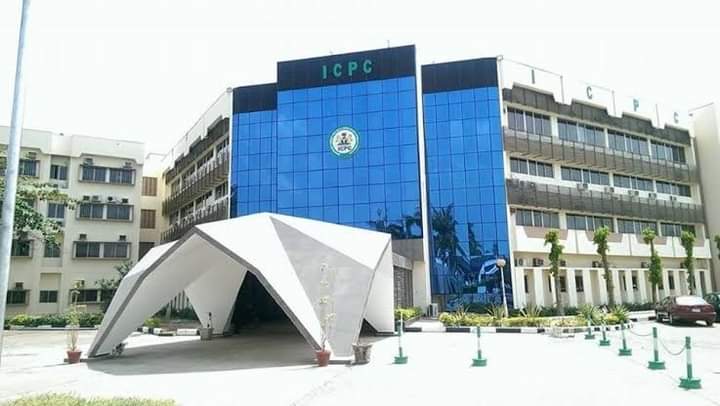
Collective Synergy Key To Reducing Corruption — ICPC
The Katsina State Office of the Independent Corrupt Practices and Other Related Offences Commission (ICPC) has reaffirmed its commitment to strengthening public collaboration in the fight against corruption and related offences.
The Commission emphasised that reducing corruption to the barest minimum is a shared civic responsibility requiring active partnership between government institutions, non-governmental organisations, and community stakeholders. This position was reiterated during a weekly public enlightenment programme on Vision FM Katsina titled “Babbar Magana.”
During the session, the Commission also celebrated Nigeria’s recent exit from the Financial Action Task Force (FATF) Grey List, describing it as a milestone achieved through strategic reforms and the leadership of the ICPC Chairman, Dr. Musa Adamu Aliyu, SAN.
Speaking on behalf of the Katsina Resident Anti-Corruption Commissioner (RACC), Mr. Samuel S. Lodam, Assistant Director Sani Tarauni Tukur of the ICPC Media and Public Communication Unit noted that the Commission has remained resolute in discharging its anti-corruption mandate across both public and private sectors.
He stated that as one of Nigeria’s leading anti-graft agencies, the ICPC continues to promote transparency, institutional integrity, and the responsible management of public resources as critical pillars for national development.
Mr. Lodam highlighted the Commission’s comprehensive and proactive approach to tackling corruption, describing it as a defining element of Nigeria’s broader anti-corruption framework. He cited the ICPC’s collaboration with Ministries, Departments and Agencies (MDAs), non-governmental organisations (NGOs), and Community-Based Organisations (CBOs) to institutionalise preventive measures, drive policy reforms, and entrench integrity-driven practices at the grassroots level.
He further referenced key initiatives such as the National Ethics and Integrity Policy (NEIP) and the establishment of Anti-Corruption and Transparency Units (ACTUs) across MDAs, noting that these mechanisms are designed to strengthen ethical conduct and accountability in public service.
On investigative procedures, Mr. Lodam assured members of the public that the Commission conducts thorough and impartial investigations into all allegations of corruption, emphasising fairness, objectivity, and professionalism in handling cases.
“We in the ICPC stand as a pillar of Nigeria’s anti-corruption architecture,” he stated. “Our goal is to restore public trust in governance and ensure that national resources are utilised for the collective good. Through transparency, accountability, and institutional rebirth, we aim to reposition Nigeria positively within the global community.”
The programme concluded with discussions on changing public perceptions and reinforcing the importance of collective national vigilance in sustaining the fight against corruption.
