
 Ibom Focus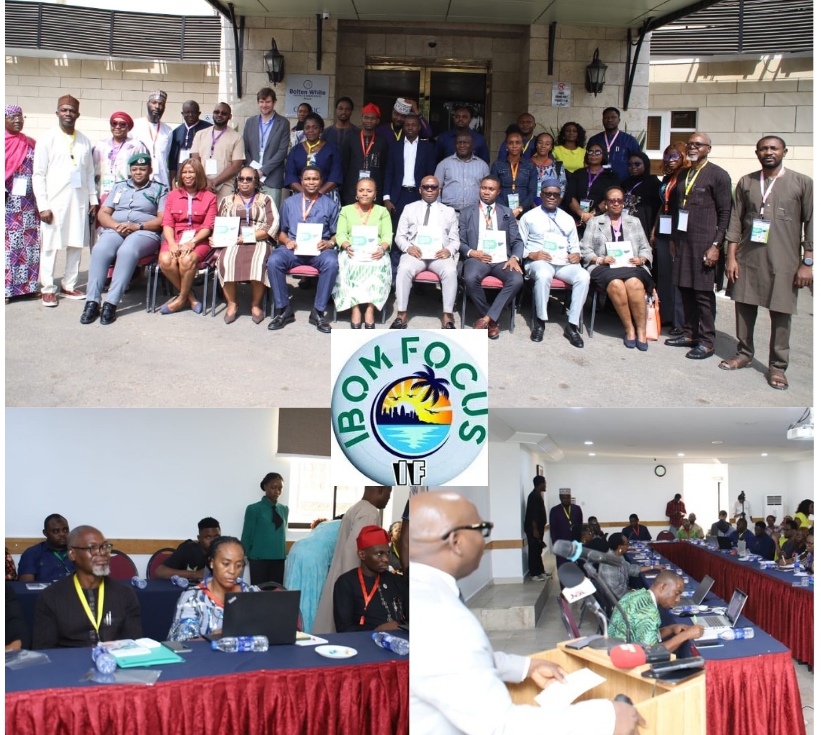
FG Moves To Curb Rising Health Hazards From Unsafe Cosmetics
The Federal Government, in collaboration with development partners, has inaugurated the National Cosmetics Safety Management Technical Working Group (NCSM-TWG) as part of renewed efforts to curb the rising public health risks associated with unsafe cosmetic products in Nigeria.
The Technical Working Group was inaugurated on Tuesday in Abuja, marking a shift from policy development to concrete implementation of cosmetic safety regulations nationwide.
Speaking on behalf of the Permanent Secretary, Federal Ministry of Health and Social Welfare, Daju Kachollom mni, the Senior Technical Assistant to the Permanent Secretary, Dr. Dogara Okara, said the initiative reflects the Federal Government’s determination to address cosmetic-related health hazards that have long been underestimated.
He warned that unsafe cosmetic products now constitute one of the most serious but overlooked public health threats of the 21st century, with health consequences ranging from skin disorders and discoloration to hormonal disruption, kidney failure and cancer.
“Cosmetic products containing toxic substances such as formaldehyde and heavy metals can damage vital organs, including the kidneys, eyes and heart,” he said, noting that these dangers informed the Ministry’s decision to establish a comprehensive national policy to safeguard public health.
He explained that the National Policy on Cosmetics Safety and Health, approved and launched during the 66th National Council on Health meeting in Calabar in November 2025, provided the legal and policy framework for the establishment of the Technical Working Group.
According to him, the NCSM-TWG is mandated to provide strategic and technical guidance for policy implementation, coordinate cosmetic safety initiatives across sectors, translate directives from the National Multi-Sectoral Ministerial Advisory Committee on Cosmetics into actionable programmes, and support the review and enforcement of safety standards. The committee is expected to serve a five-year term.
Earlier, the Director and Head of the Food and Drug Services Department at the Federal Ministry of Health and Social Welfare, Mrs. Olufowobi-Yusuf Adeola mni, said the inauguration of the TWG signalled the beginning of coordinated technical engagement under the national policy. She added that the forum provides a platform to align expertise, expectations and priority actions for effective implementation.
In his remarks, the Chairman of the Technical Working Group and Director/Head of the Cosmetics Safety Management Programme, Dr. Paul Okhakhu, said the absence of a coordinated policy framework in the past had allowed the widespread circulation of substandard and unsafe cosmetic products.
“Improperly formulated cosmetics can disrupt the endocrine system, damage the kidneys and even affect unborn children,” he said, adding that the policy and the Technical Working Group were designed to align Nigeria with global best practices and provide clear guidance for producers, regulators and consumers.
Dr. Okhakhu stated that between 2026 and 2030, Nigerians should expect stronger regulation, improved product labelling, increased public awareness and safer cosmetic products that no longer pose long-term health risks.
Delivering a goodwill message, the World Health Organization (WHO), represented by Dr. Edwin Isotu Edeh, described the policy as “pro-health, pro-industry and pro-Africa,” warning that unregulated cosmetic production, particularly at informal levels, could silently compromise the health of both present and future generations.
On enforcement, the National Agency for Food and Drug Administration and Control (NAFDAC) disclosed that implementation of the cosmetics safety policy has already commenced. In a goodwill message, the Director in charge of Imported and Locally Manufactured Cosmetics, Prince Ikenna Usofor, stressed that no cosmetic product—whether imported or locally produced—would be allowed into the Nigerian market without regulatory clearance.
He explained that poorly formulated cosmetics often expose users to toxic substances such as mercury, lead and excessive fluoride, which can accumulate in the body over time and lead to kidney failure, hormonal imbalance and other systemic health conditions.
“This policy must not become one of those documents left on the shelf. For NAFDAC, implementation has already begun,” Usofor said.
Also speaking, the Country Representative of Resolve to Save Lives, Nanlop Ogbureke, described the National Policy on Cosmetics Safety and Health as a landmark achievement that fills a long-standing regulatory gap. He said cosmetics safety lies at the intersection of public health, consumer protection and economic development.
Resolve to Save Lives noted that the policy not only protects Nigerians from harmful products but also strengthens the cosmetics value chain by promoting quality, innovation and compliance with global standards, adding that Nigeria’s approach could serve as a model for other African countries.
The Technical Working Group comprises representatives from key ministries, including Health, Environment, and Industry, Trade and Investment; regulatory agencies such as NAFDAC; law enforcement bodies; academia; and development partners including WHO and Resolve to Save Lives.
With the inauguration of the NCSM-TWG, the Federal Government says Nigeria is now better positioned to halt the circulation of harmful cosmetic products through coordinated, evidence-based regulation.